How to Avoid Six-Figure Disposal Surprises
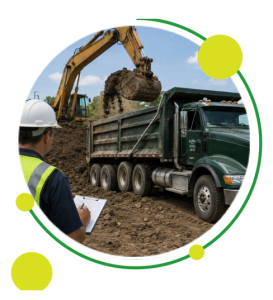
Contaminated soil disposal can become one of the largest costs on an environmental or construction project. A decision made early in the process can affect transportation costs, facility fees, project schedules, and regulatory compliance.
For projects in New York, New Jersey, and Pennsylvania, the challenge becomes even greater. Soil classifications, facility acceptance criteria, transportation distances, and state requirements can vary significantly.
The best way to avoid a six-figure disposal surprise is to understand the soil before the first truck leaves the site.
Start With the Analytical Data
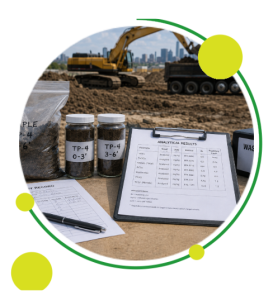
A successful disposal strategy begins with a careful review of the available laboratory data.
Environmental professionals should confirm what contaminants are present and at what concentrations. Testing may include:
- Volatile Organic Compounds (VOCs)
- Semi-Volatile Organic Compounds (SVOCs)
- Metals
- PCBs
- Pesticides and herbicides
- PFAS, when applicable
- Totals analysis
- TCLP analysis
The results help determine the soil waste classification. That classification then affects which facilities can legally accept the material.
A small difference in contaminant concentration can sometimes change the available disposal options dramatically.
Understand the Waste Classification Before Pricing Disposal
Not all contaminated soil belongs in the same disposal category.
Depending on the analytical results and site history, soil may qualify for reuse, recycling, non-hazardous landfill disposal, hazardous waste treatment, or another approved pathway.
For example, a project may contain several categories of soil within the same excavation area. Treating every load as the highest-cost classification can unnecessarily increase the project budget.
Instead, environmental professionals should identify each soil category before selecting disposal facilities.
This is where experienced waste classification review can create significant savings.
Match the Soil to the Right Facility
Disposal facilities operate under permits that define what materials they can accept.
Those limits vary from facility to facility.
A landfill may accept one contaminant at a certain concentration while another facility may reject the same material. Recycling and beneficial reuse facilities also maintain their own acceptance criteria.
Because of these differences, facility selection should involve more than comparing tipping fees.
The lowest advertised disposal price does not always produce the lowest total project cost.
Transportation distance, approval time, material handling requirements, and facility restrictions all affect the final Transportation and Disposal (T&D) cost.
Consider More Than One Disposal Facility
Large contaminated soil projects often involve multiple waste classifications.
In those situations, sending every load to one facility may be convenient, but it may not be economical.
Instead, project teams can sometimes reduce costs by directing different soil classifications to different facilities.
For example:
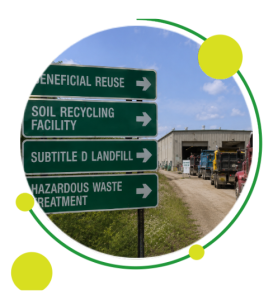
- Lower-impact soil may qualify for beneficial reuse.
- Other material may qualify for recycling.
- Some soil may require Subtitle D landfill disposal.
- Hazardous material may require RCRA treatment or hazardous waste landfill disposal.
Separating these materials can significantly reduce the average disposal cost per ton.
On large projects, even a modest reduction in cost per ton can translate into tens of thousands of dollars in savings.
Confirm Facility Acceptance Before Mobilization
One of the most expensive mistakes happens when trucks arrive before the receiving facility has approved the material.
Before scheduling a load-out, complete the required waste profiles and provide the supporting analytical data.
The receiving facility should review the information and issue approval before transportation begins.
This step helps prevent:
- Rejected loads
- Truck standby charges
- Additional sampling
- Schedule delays
- Emergency rerouting
- Duplicate transportation costs
A few days spent securing approvals can prevent weeks of disruption later.
Watch for Changes in Facility Acceptance Criteria
The contaminated soil disposal market does not stand still.
Facilities may change acceptance limits when permits change or state agencies update regulatory requirements. New recycling and reuse facilities may also enter the market.
As a result, the best disposal option for a project today may differ from the best option used on a similar project several years ago.
Environmental professionals working in New York, New Jersey, and Pennsylvania should confirm current facility requirements rather than relying on past experience alone.
Plan Transportation and Disposal Together
Disposal cost is only part of the equation.
Transportation can represent a significant portion of the project budget, particularly when facilities are located far from the site.
A facility with a lower tipping fee may actually cost more once trucking expenses are included.
The best-case solution considers the entire T&D picture:
- Disposal or treatment fee
- Transportation distance
- Truck availability
- Material volume
- Facility operating hours
- Approval timelines
- Load-out schedule
- Documentation requirements
Evaluating these factors together provides a much clearer picture of the true project cost.
Build the Strategy Before the Excavation Begins
The most expensive contaminated soil decisions usually happen under pressure.
Once excavation starts, stockpiles grow quickly. Trucks need destinations. Contractors need answers. Project schedules keep moving.
That is not the ideal time to begin comparing disposal options.
Instead, build the disposal strategy early.
Review the analytical data. Confirm the waste classifications. Identify several potential facilities. Obtain approvals. Then develop the transportation plan.
That preparation gives the project team options before the clock starts ticking.
Experience Matters When the Numbers Get Large
Enviro-Disposal Group has worked with contaminated soil transportation and disposal projects since 1991. Company president Rich Rivkin has managed more than 3,000 projects involving hazardous and non-hazardous contaminated soils, dredged sediments, and other regulated materials.
That experience provides perspective that a facility price sheet cannot.
The goal is not simply to find a place that will accept the soil.
The goal is to identify the best compliant disposal strategy for the specific project.
For environmental professionals, contractors, developers, and property owners working in New York, New Jersey, and Pennsylvania, that can mean the difference between a predictable disposal budget and a six-figure surprise.
Before You Move Contaminated Soil
Before scheduling the first truck, ask:
- Do we fully understand the analytical data?
- Have we confirmed the soil waste classification?
- Have we compared multiple disposal and recycling options?
- Are current facility acceptance limits confirmed?
- Could different soil classifications go to different facilities?
- Have we calculated transportation and disposal costs together?
- Has the receiving facility approved the material?
If any answer is uncertain, address it before excavation and transportation begin.
The best time to control contaminated soil disposal costs is before the soil starts moving.
If your interested in all the ways we can help, connect with us via the Contact Us page.